How to Choose the Right Concrete Grade

Choosing the right concrete grade is very important before starting construction, as it affects the strength and durability of the structure more than you might think. Choosing a grade that is too high increases the cost without adding much value, while choosing one that is too low can compromise structural strength. Understanding how to choose the right concrete grade for your project can save you from costly mistakes.
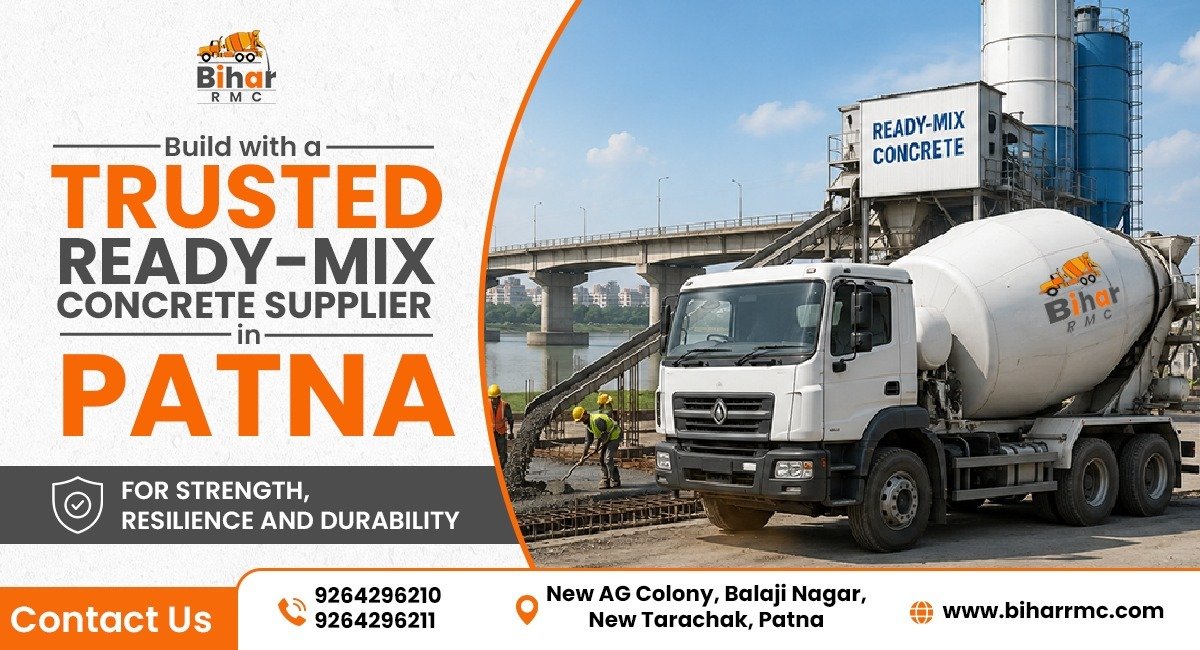
But there is a way to avoid all this hassle: choose a reliable ready-mix concrete supplier. A reputable supplier has professionals who can select the right concrete grade for your project.
This blog will give you a brief idea of how to choose the right concrete grade.
What a Concrete Grade Actually Means
The letter ‘M’ in concrete grades denotes ‘mix’, and the number indicates the characteristic compressive strength (in MPa) that the concrete achieves after 28 days of curing. There are many types of concrete grades, such as M10, M20, M25, and M30. Each grade is suitable for different types of structures based on their load-bearing requirements.
A lower concrete grade generally costs less per cubic metre because it requires less cement, while a higher grade costs more due to its higher cement content.
Why Choosing the Right Concrete Grade Is Important
Choosing the right concrete grade is crucial because it affects the structure’s strength, durability, cost, and long-term performance. So, it is always a better decision to understand how to choose the right concrete grade.
Let’s first understand what choosing the wrong concrete grade can affect.
1. Structural Strength
Concrete grades have a direct bearing on the structural strength and safety of a building. Concrete grades are selected according to the loads a structure is designed to bear. If the chosen grade is not suitable for the structural requirements, the building’s safety may be compromised. To avoid such issues, ready-mix concrete has become a reliable and practical solution.
2. Cost
Choosing the right concrete grade can save you from unnecessary expenses. Selecting a grade that is higher than required increases the overall construction cost without adding significant value. Therefore, choosing the appropriate grade is also beneficial for your budget.
3. Legal Compliance
Choosing the right concrete grade also helps ensure compliance with building codes and contributes to the safety, durability, and long-term performance of the structure.
4. Long-Term Maintenance
The concrete grade significantly affects the density, durability, and resistance of concrete to environmental stress. Choosing the appropriate grade can reduce maintenance costs in the long run.
Different Grade Ranges and Their Suitability
As discussed earlier, there are many concrete grades, and their suitability depends on the load a structure is designed to bear.
Non-Structural Grades (M5, M10 and M15)
M5 is an extremely low-strength concrete grade and is rarely used in modern structural construction. M10 and M15 are low-strength concrete grades with higher cement content than M5. These grades are not suitable for structural elements and are commonly used for levelling courses, fillers, and pathway paving.
The Residential Standard (M20)
M20 is primarily used in residential and low-rise buildings. It is commonly used for slabs, beams, and columns in individual houses. It is also suitable for residential buildings of up to four or five storeys where the structural load is relatively moderate.
The Commercial and Mid-Rise Concrete Grade (M25)
M25 is a workhorse grade in commercial construction. It is typically used in residential buildings above five storeys, retail buildings, office complexes, and commercial floor slabs. It is generally produced as a design mix to achieve the required strength and quality.
For Heavy Infrastructure and Heavy Loads (M30 and M35)
These grades are used for multi-storey buildings and reinforced concrete structures that require greater strength and better resistance to environmental conditions. M30 is often the preferred choice for constructing flyovers, bridges, metro structures, and large commercial basements. M35 is used for structures that require higher strength and are exposed to harsher environmental conditions.
M40 and Above Concrete Grades
The lower floors of buildings with more than 20 storeys generally require M40 and higher concrete grades. Unlike basic nominal mixes, M40 and higher grades cannot be prepared using simple volume ratios such as 1:2:4. They require a laboratory-designed mix to achieve the desired strength and performance. This is one of the reasons why ready-mix concrete is widely preferred for such projects.
How Does Ready-Mix Concrete Ensure the Right Concrete Grades?
At ready-mix concrete plants, every stage of concrete production is handled by professionals. Therefore, selecting the right concrete grade is not a challenge. They carefully study the project’s nature and structural requirements before choosing the most suitable concrete grade. They also maintain precise proportions of cement, sand, aggregates, and water, as the correct mix ratio plays a vital role in achieving the desired strength and durability.
Ultimately, building a strong and durable structure depends on every detail—from selecting the right concrete grade to maintaining the correct mix proportions—and that is exactly what a reliable ready-mix concrete supplier ensures.
Conclusion
Choosing the right concrete grade is more important than many people realise, as it significantly affects the strength, durability, safety, and overall performance of a structure. Therefore, understanding how to choose the right concrete grade is essential before starting any construction project.
However, if you choose a reliable ready-mix concrete supplier, you can avoid much of the hassle. From selecting the appropriate concrete grade to ensuring it meets your project’s requirements, a trusted supplier takes care of every detail. That is exactly what Bihar RMC does. It has earned a strong reputation in Patna for its precision, advanced production processes, and commitment to delivering high-strength, quality concrete.
FAQs
1. What is the most commonly used concrete grade?
The most commonly used concrete grade for residential and low-rise commercial buildings is M20.
2. Does increasing the concrete grade automatically improve structural strength?
No. Increasing the concrete grade does not automatically improve structural strength. Structural strength also depends on factors such as proper mix design, steel reinforcement, structural design, and construction quality.
3. How does ready-mix concrete help in choosing the right concrete grade?
Ready-mix concrete suppliers have experienced professionals who assess your project’s requirements and select the most suitable concrete grade. They also ensure precise mix design and quality control to achieve the required strength and durability.
4. What does the number in a concrete grade signify?
The number in a concrete grade indicates its characteristic compressive strength, measured in MPa (N/mm²), after 28 days of curing. For example, M20 has a characteristic compressive strength of 20 MPa after 28 days.



Post Comment